

Every season of Shark Tank produces a handful of products that viewers remember for years. Some become household names. Others disappear almost as quickly as they arrive. Then there are inventions like Nubrella—products that seem strange at first glance yet continue generating curiosity long after their television appearance.
The search term “Nubrella Shark Tank net worth” remains surprisingly popular because people want to know what happened after the cameras stopped rolling. Did the hands-free umbrella become a commercial success? Did founder Alan Kaufman build a fortune from his invention? And what is the company actually worth today?
The answers are more complicated than many expect.
Unlike viral consumer products that exploded into major retail chains, Nubrella followed a different path. It became a memorable symbol of creative problem-solving, attracted media attention worldwide, and developed a loyal niche audience. Yet its financial journey reveals the challenges inventors often face when introducing unconventional products to the market.
This article takes a closer look at Nubrella’s story, Alan Kaufman’s entrepreneurial journey, the company’s estimated valuation, and why people are still searching for information about the wearable umbrella years later.
Nubrella Biography Overview
Company Profile Table
| Detail | Information |
|---|---|
| Product Name | Nubrella |
| Founder | Alan Kaufman |
| Industry | Consumer Products |
| Product Type | Hands-Free Wearable Umbrella |
| Shark Tank Appearance | Early Seasons of Shark Tank |
| Original Ask | $200,000 for 25% Equity |
| Headquarters | United States |
| Status | Limited/Niche Market Presence |
| Known For | Wearable Rain Protection System |
| Estimated Value | Low seven-figure range (unverified estimates) |
Founder Profile
| Category | Details |
|---|---|
| Name | Alan Kaufman |
| Profession | Inventor & Entrepreneur |
| Known For | Inventing Nubrella |
| Industry Experience | Product Development |
| Public Recognition | Shark Tank Appearance |
| Legacy | Innovative Weather Protection Design |
What Is Nubrella?
At its core, Nubrella was designed to solve a simple problem.
Traditional umbrellas require one hand. They flip in heavy winds, limit mobility, and often fail to provide complete protection from rain.
Alan Kaufman imagined something entirely different.
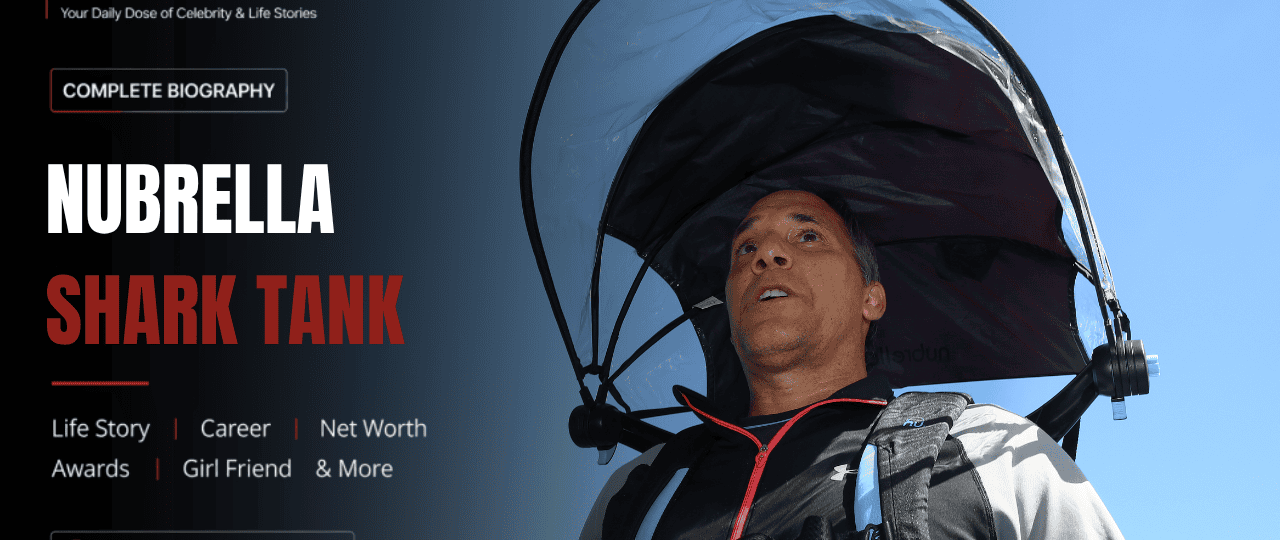
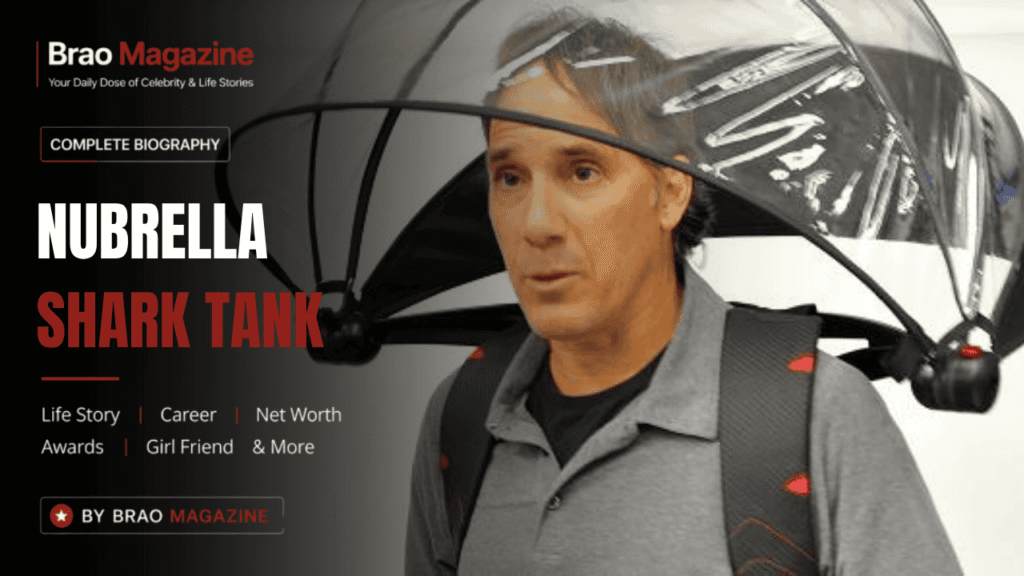
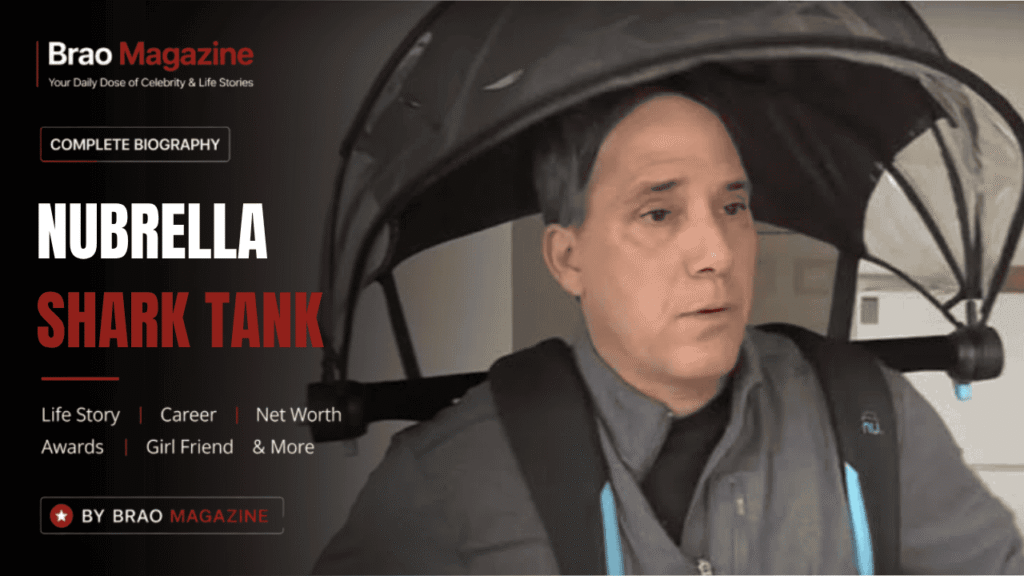
The Nubrella looked more like a transparent weather shield than a traditional umbrella. It attached to the user’s shoulders and wrapped around the head and upper body using a clear protective canopy. This allowed users to remain hands-free while walking, cycling, commuting, or working outdoors.
The product generated immediate attention because it challenged a design concept that had remained largely unchanged for centuries.
Some people loved its practicality.
Others thought it looked unusual.
Either way, people talked about it.
The Early Life and Career of Alan Kaufman
Before becoming known as the inventor behind Nubrella, Alan Kaufman spent years developing ideas and looking for practical solutions to everyday problems.
Unlike celebrity entrepreneurs who enter business with fame or investor backing, Kaufman’s journey reflected the reality experienced by many inventors. He identified a common frustration—broken umbrellas and poor weather protection—and began experimenting with alternatives.
His approach reflected a classic inventor mindset.
Instead of asking how to improve an umbrella slightly, he asked whether the umbrella itself could be redesigned entirely.
That question eventually led to the creation of Nubrella.
Although extensive public information about his personal life remains limited, Kaufman earned recognition for persistence, creativity, and willingness to challenge conventional thinking.
The Shark Tank Appearance That Changed Everything
Entering the Tank
Nubrella gained national attention after appearing on Shark Tank.
Walking into the pitch room with what looked like a wearable bubble immediately captured the sharks’ attention.
The product was impossible to ignore.
Kaufman sought investment to expand manufacturing, increase visibility, and bring the invention to a larger audience.
The presentation generated mixed reactions.
Some sharks appreciated the innovation.
Others questioned whether consumers would actually wear such a distinctive product in public.
That debate became one of the defining themes of Nubrella’s journey.
The invention solved a real problem, but mainstream acceptance proved more difficult than technological innovation.
Nubrella Shark Tank Net Worth: How Much Is It Worth Today?
This is the question most readers are searching for.
The challenge is that Nubrella is a private company, meaning verified financial statements and valuation reports are not publicly available.
As a result, any net worth figure circulating online should be treated as an estimate rather than a confirmed number.
Based on available business analyses and industry commentary, estimates generally place the company’s value somewhere within the low seven-figure range. Various independent reports have suggested valuations ranging from under $1 million to several million dollars, though none have been officially confirmed by the company.
Why Estimates Vary So Much
Several factors make valuation difficult:
- No public financial reports
- Unknown annual revenue
- Private ownership structure
- Limited market visibility
- Intellectual property considerations
- Brand recognition value
Because of these uncertainties, analysts often focus on patents, product design assets, media exposure, and historical sales performance rather than traditional public-company metrics.
Understanding the Business Model
Revenue Sources
Nubrella’s business model differed from many Shark Tank success stories.
Rather than relying on mass retail distribution, sales largely depended on:
Direct-to-Consumer Sales
Customers purchased directly from company channels and online platforms.
Word-of-Mouth Marketing
The product’s unusual appearance naturally generated conversation and publicity.
Media Exposure
Television appearances and online coverage continued driving interest long after the original Shark Tank episode aired.
Intellectual Property
Patents and proprietary design elements contributed to the company’s overall value.
Why Nubrella Never Became Mainstream
This remains one of the most fascinating aspects of the story.
Many products fail because they solve imaginary problems.
Nubrella solved a genuine one.
Yet widespread adoption remained elusive.
The Appearance Challenge
Consumer behavior often depends on social acceptance.
People routinely wear rain jackets because they blend into everyday fashion.
Nubrella’s futuristic appearance made some potential buyers hesitate, even if they recognized its practical benefits.
Seasonal Demand
Weather products naturally face fluctuating demand.
Rainy seasons create spikes in interest.
Dry seasons reduce sales activity.
That makes scaling a weather-focused business more difficult.
Manufacturing Complexity
Unlike standard umbrellas, Nubrella required specialized materials and design components.
This increased production challenges and limited opportunities for low-cost mass manufacturing.
Timeline of Nubrella’s Journey
| Year | Milestone |
|---|---|
| Concept Stage | Initial invention development |
| Product Launch | Early commercial introduction |
| Shark Tank Era | National television exposure |
| Post-Show Growth | Increased public awareness |
| Product Evolution | Design refinements |
| Current Era | Continued niche recognition |
The Public Fascination With Nubrella
Years after its television appearance, Nubrella continues attracting online searches.
Why?
Because people love unconventional success stories.
The product occupies a unique place in entrepreneurial culture.
It wasn’t a complete failure.
It wasn’t a billion-dollar success either.
Instead, it became something arguably more interesting: a case study in innovation, persistence, and market realities.
Entrepreneurs frequently study products like Nubrella because they demonstrate how invention and commercial success are not always the same thing.
Social Media Presence and Online Interest
Although Nubrella never developed the massive social following enjoyed by major consumer brands, the invention benefited from something nearly as valuable:
Curiosity.
Videos, articles, and discussions about the wearable umbrella continued appearing across internet platforms for years.
People often encountered the product for the first time and wondered whether it was real.
Others remembered seeing it on television and searched for updates.
This ongoing curiosity helped maintain awareness long after the original marketing push.
Interesting Facts About Nubrella
It Reinvented a 3,000-Year-Old Product
Few inventors attempt to redesign something as universally recognized as an umbrella.
It Sparked Immediate Reactions
Very few products create instant opinions.
Nubrella managed to generate both admiration and skepticism within seconds.
It Became More Famous Than Many Better-Selling Products
Some Shark Tank products generated higher revenue but faded from public memory.
Nubrella remained memorable because of its distinctive design.
It Demonstrated the Power of Visibility
Even without becoming a dominant consumer brand, the invention achieved global recognition.
Why “Nubrella Shark Tank Net Worth” Is Trending
Search volume around the keyword continues because it intersects several popular interests:
- Shark Tank success stories
- Inventor biographies
- Net worth research
- Entrepreneurial case studies
- Product innovation
- Viral business stories
People are naturally curious about what happened after the television spotlight disappeared.
The Nubrella story answers that curiosity with a more nuanced narrative than the typical overnight-success tale.
Cultural Relevance and Legacy
Nubrella occupies an unusual place in business culture.
It represents the inventor willing to challenge convention.
Many entrepreneurs see value in the story because it highlights a difficult truth:
Being innovative isn’t enough.
Products must also fit consumer behavior, manufacturing realities, and market expectations.
Yet the invention’s legacy remains positive.
Few people can say they introduced an entirely new category of weather protection and sparked conversations worldwide.
Alan Kaufman accomplished exactly that.
Future Expectations
Predicting the future of niche inventions is never simple.
However, the broader concept behind Nubrella remains relevant.
Hands-free mobility continues becoming more valuable in modern life.
Cyclists, delivery workers, commuters, photographers, and outdoor professionals all benefit from weather protection that doesn’t occupy their hands.
Future versions of wearable weather technology may borrow ideas that Nubrella introduced years earlier.
In that sense, the invention’s influence may extend beyond its own commercial performance.

Frequently Asked Questions
What is Nubrella Shark Tank net worth?
There is no officially confirmed valuation. Independent estimates generally place the company’s value somewhere within the low seven-figure range, though figures vary widely because the company is privately held.
Who invented Nubrella?
Nubrella was invented by Alan Kaufman, an entrepreneur and inventor focused on solving practical everyday problems.
Did Nubrella get a Shark Tank deal?
Reports vary regarding the details of negotiations shown on television, but multiple sources indicate that any proposed investment arrangement did not ultimately become a long-term transformative partnership for the business.
Is Nubrella still available?
Availability has varied over time. Interested buyers should verify current product availability through official sales channels and marketplaces.
Why was Nubrella so unique?
Unlike traditional umbrellas, Nubrella used a wearable shoulder-mounted canopy that allowed users to remain hands-free while staying protected from rain and wind.
Why do people still search for Nubrella?
The combination of Shark Tank exposure, unusual design, entrepreneurial persistence, and ongoing curiosity keeps interest alive years after its television appearance.
Conclusion
The story behind Nubrella Shark Tank net worth isn’t simply about money.
It’s about an inventor who looked at an everyday object and wondered whether it could be completely reinvented.
Alan Kaufman’s wearable umbrella may never have achieved the massive commercial success of some Shark Tank legends, but it earned something many products never achieve: lasting recognition.
People still remember it.
They still search for it.
They still debate whether it was brilliant, strange, or both.
That kind of cultural staying power has value of its own.
In a business world crowded with copycat products and short-lived trends, Nubrella stands as a reminder that originality still matters. Sometimes the most fascinating entrepreneurial stories aren’t the ones that become billion-dollar empires. They’re the ones that challenge assumptions, spark conversation, and leave a lasting mark on how people think about innovation.