

Businesses generate more data than ever before. Customer interactions, sales transactions, marketing campaigns, operational workflows, financial reports, and digital engagement metrics all produce streams of information every second. Yet having data is not the same as understanding it.
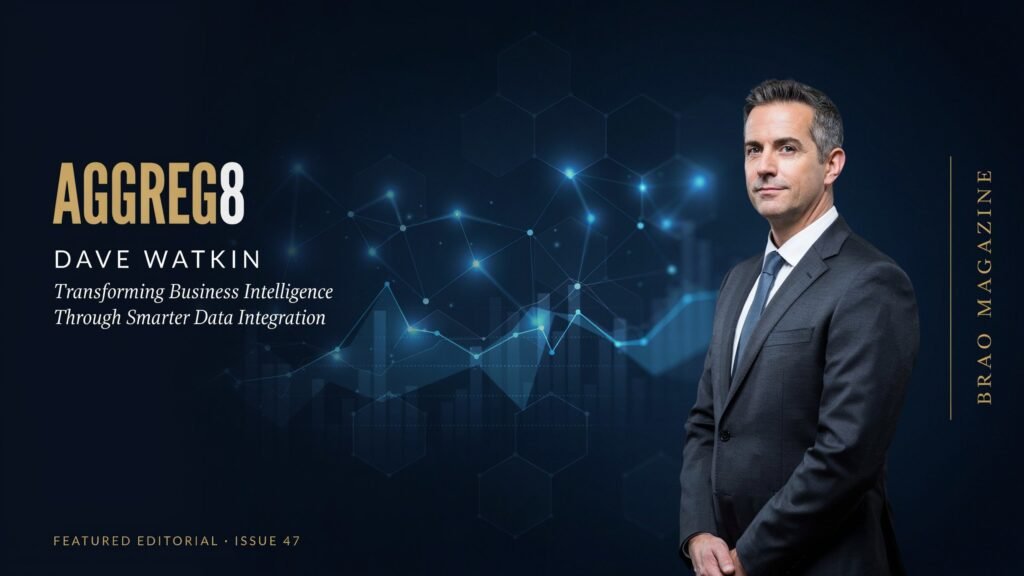
This challenge has created demand for platforms that can collect, organize, analyze, and transform information into actionable intelligence. Among the names increasingly associated with this movement is Aggreg8, a data-focused platform linked to entrepreneur and technology advocate Dave Watkin.
Interest in “Aggreg8 Dave Watkin” has grown as organizations search for more efficient ways to manage information, improve decision-making, and unlock insights hidden within complex datasets. While details about the platform continue to evolve, the broader conversation around Aggreg8 reflects a larger shift occurring across industries: the race toward intelligent, data-driven operations.
This article explores who Dave Watkin is, what Aggreg8 represents, how data aggregation technologies are reshaping business strategy, and why platforms built around unified analytics are becoming increasingly important in modern organizations.
Who Is Dave Watkin?
Dave Watkin is frequently associated with innovation, digital transformation, and technology-driven business solutions. His work has attracted attention among professionals interested in business intelligence, analytics, operational efficiency, and data management.
Like many entrepreneurs operating in the technology sector, Watkin’s reputation appears to be tied to solving practical business challenges rather than simply building software for software’s sake. The focus often centers on helping organizations make better use of the information they already possess.
In an economy increasingly driven by digital assets and real-time decision-making, leaders who understand how to convert raw information into measurable business outcomes have become especially valuable.
Why Industry Professionals Are Paying Attention
Several trends have contributed to growing interest in figures connected to data innovation:
- Rapid growth of cloud computing
- Increasing reliance on business intelligence tools
- Demand for real-time analytics
- Expansion of artificial intelligence technologies
- Rising complexity of enterprise data ecosystems
As businesses accumulate information from dozens or even hundreds of systems, the ability to centralize and interpret that information becomes a competitive advantage.
This is where platforms such as Aggreg8 enter the conversation.
Understanding Aggreg8
At its core, Aggreg8 is associated with the concept of data aggregation and business intelligence.
Data aggregation refers to the process of collecting information from multiple sources and combining it into a unified system where it can be analyzed, visualized, and used for decision-making.
Rather than forcing teams to manually gather reports from different departments, aggregation platforms automate the process and present information in a more accessible format.
The Fundamental Idea
Imagine a company using:
- CRM software for customer management
- Accounting software for finances
- Marketing platforms for campaigns
- E-commerce systems for sales
- Customer support software for service requests
Each system contains valuable information.
The problem is that these systems often operate independently.
Aggregation platforms attempt to solve this issue by bringing everything together.
Instead of asking:
“What happened in marketing?”
or
“What happened in sales?”
business leaders can ask:
“What is happening across the entire organization?”
That shift creates significant strategic value.
Why Data Aggregation Matters More Than Ever
The global economy increasingly rewards organizations that can respond quickly to change.
Whether it’s consumer behavior, supply chain disruptions, market trends, or operational inefficiencies, speed matters.
Unfortunately, fragmented data slows decision-making.
Common Problems Businesses Face
| Challenge | Impact |
|---|---|
| Data silos | Teams work with incomplete information |
| Manual reporting | Time-consuming and error-prone |
| Inconsistent metrics | Conflicting business insights |
| Delayed reporting | Slower decision-making |
| Poor visibility | Reduced operational efficiency |
Data aggregation seeks to eliminate these obstacles.
By centralizing information, organizations gain a clearer understanding of performance and opportunities.
The Vision Behind Aggreg8
Although many software platforms focus solely on reporting, modern data solutions increasingly emphasize intelligence rather than information alone.
The broader vision often associated with Aggreg8 involves helping organizations:
- Connect multiple data sources
- Simplify analytics
- Improve visibility
- Enhance forecasting capabilities
- Support strategic planning
- Reduce reporting complexity
This reflects a significant shift in how businesses think about technology.
Years ago, software primarily stored information.
Today, organizations expect software to help interpret information.
That difference is enormous.
How Modern Aggregation Platforms Work
To understand Aggreg8’s relevance, it helps to understand the typical architecture behind data aggregation systems.
Data Collection
Information is gathered from multiple sources.
Examples include:
- Databases
- Websites
- Applications
- ERP systems
- CRM platforms
- Financial systems
- Marketing tools
SData Processing
Collected information is cleaned and standardized.
This step removes:
- Duplicate records
- Formatting inconsistencies
- Inaccurate entries
- Data conflicts
Data Integration
Different datasets are merged into a unified structure.
The goal is to create a single source of truth.
Analysis
Advanced algorithms identify:
- Trends
- Patterns
- Correlations
- Risks
- Opportunities
Visualization
Insights are presented through:
- Dashboards
- Charts
- Reports
- KPIs
- Executive summaries
This final step allows decision-makers to quickly understand what is happening across their organizations.
Key Features Commonly Associated With Aggregation Platforms
While specific capabilities vary by platform, modern solutions typically include several core features.
Unified Dashboards
Executives no longer need to review separate reports from every department.
A centralized dashboard provides a comprehensive overview.
Real-Time Reporting
Traditional reporting cycles often create delays.
Real-time reporting enables faster reactions to changing conditions.
Automated Data Collection
Automation reduces manual work and minimizes human error.
Predictive Analytics
Advanced systems increasingly use machine learning to forecast outcomes.
Potential applications include:
- Revenue forecasting
- Demand planning
- Customer retention
- Inventory management
Data Visualization
Humans process visuals faster than spreadsheets.
Interactive charts improve comprehension and decision-making.
The Rise of Business Intelligence Platforms
Aggreg8 exists within a larger business intelligence ecosystem.
Business intelligence, often abbreviated as BI, has become one of the most important categories in enterprise technology.
Evolution of Business Intelligence
| Era | Primary Focus |
|---|---|
| 1980s | Basic reporting |
| 1990s | Data warehousing |
| 2000s | Dashboard development |
| 2010s | Self-service analytics |
| 2020s | AI-powered intelligence |
Today’s organizations want more than reports.
They want recommendations, predictions, and actionable insights.
This evolution explains why aggregation platforms continue to gain relevance.
Industries That Benefit From Data Aggregation
Virtually every industry can benefit from improved data visibility.
Financial Services
Financial institutions use aggregated data for:
- Risk analysis
- Fraud detection
- Customer segmentation
- Regulatory reporting
Healthcare
Healthcare organizations leverage unified data to improve:
- Patient outcomes
- Resource allocation
- Operational efficiency
Retail
Retail businesses use aggregated insights to optimize:
- Inventory management
- Customer experiences
- Marketing performance
Manufacturing
Manufacturers analyze operational data to improve:
- Productivity
- Maintenance schedules
- Supply chain performance
Marketing Agencies
Agencies often combine campaign data from multiple platforms to provide clients with clearer performance insights.
Benefits of an Aggregated Data Strategy
Organizations implementing aggregation frameworks often pursue several key benefits.
Better Decision-Making
Data-driven decisions tend to be more reliable than assumptions.
Improved Operational Efficiency
Automation reduces repetitive tasks.
Greater Visibility
Executives gain a broader understanding of business performance.
Faster Reporting
Critical information becomes available sooner.
Enhanced Collaboration
Departments work from the same information source.
Potential Challenges and Limitations
No technology solution is perfect.
Aggregation initiatives can encounter obstacles.
Data Quality Issues
Poor input data creates poor output data.
Even sophisticated platforms struggle with inaccurate information.
Integration Complexity
Some legacy systems may be difficult to connect.
User Adoption
Technology delivers value only when people use it effectively.
Security Considerations
Centralized data environments require strong cybersecurity measures.
Cost and Resource Requirements
Implementation may involve:
- Software costs
- Training expenses
- Technical resources
- Ongoing maintenance
Organizations should evaluate these factors before adopting any platform.
The Growing Role of Artificial Intelligence
Artificial intelligence is transforming data aggregation.
Historically, systems focused on organizing information.
Today, AI helps explain information.
AI-Powered Capabilities
Modern platforms increasingly support:
- Predictive analytics
- Automated recommendations
- Anomaly detection
- Trend forecasting
- Natural language reporting
For example, rather than simply displaying declining sales figures, AI can highlight potential causes and recommend actions.
This dramatically increases business value.
Real-World Example: Unified Business Visibility
Consider a retail company operating:
- Physical stores
- E-commerce platforms
- Mobile applications
- Customer support channels
Without aggregation:
Each department sees only part of the picture.
With aggregation:
Leadership gains visibility across all customer touchpoints.
They can identify:
- High-performing products
- Customer behavior trends
- Revenue opportunities
- Service bottlenecks
This integrated perspective often leads to smarter decisions.
How Aggreg8 Aligns With Digital Transformation
Digital transformation is no longer optional for most organizations.
Companies must adapt to increasingly digital environments.
Data aggregation supports transformation efforts by:
- Breaking down information silos
- Improving transparency
- Supporting automation
- Enabling analytics-driven cultures
- Facilitating strategic planning
These objectives align closely with broader modernization initiatives across industries.
Comparing Traditional Reporting vs Modern Aggregation
| Traditional Reporting | Modern Aggregation |
|---|---|
| Static reports | Dynamic dashboards |
| Manual collection | Automated collection |
| Historical focus | Real-time visibility |
| Department-specific | Organization-wide insights |
| Slow updates | Continuous updates |
| Limited forecasting | Predictive analytics |
The shift from traditional reporting to aggregation represents one of the most significant changes in modern business operations.
Expert Perspective: Why Centralized Data Wins
Many organizations mistakenly believe their challenge is a lack of data.
The reality is often the opposite.
They possess too much data.
The problem lies in fragmentation.
When information is scattered across multiple systems, decision-makers struggle to identify meaningful patterns.
Centralized aggregation addresses this challenge by creating context.
Context transforms data into insight.
Insight drives action.
Action creates results.
That progression explains why aggregation platforms continue to attract attention from executives and technology leaders alike.
Future Outlook for Aggreg8 and Similar Platforms
Several trends are likely to influence the future of aggregation technology.
Greater AI Integration
Expect deeper machine learning capabilities.
Real-Time Intelligence
Businesses increasingly demand immediate insights.
Predictive Operations
Platforms will move from reporting events to anticipating them.
Enhanced Automation
Routine analytical tasks will become increasingly automated.
Improved Accessibility
Analytics tools will become easier for non-technical users.
These developments suggest continued growth for platforms operating within the business intelligence and aggregation space.
Frequently Asked Questions
What is Aggreg8?
Aggreg8 is generally associated with data aggregation and business intelligence solutions designed to help organizations consolidate information from multiple sources for analysis and decision-making.
Who is Dave Watkin?
Dave Watkin is associated with technology-driven business innovation and is often connected with discussions surrounding Aggreg8 and modern data management approaches.
Why is data aggregation important?
Data aggregation helps organizations centralize information, improve visibility, reduce reporting inefficiencies, and make more informed decisions.
How does data aggregation differ from data storage?
Data storage focuses on keeping information, while data aggregation focuses on collecting, organizing, integrating, and analyzing information from multiple sources.
Can small businesses benefit from aggregation platforms?
Yes. Small businesses often gain improved visibility into operations, sales, marketing performance, and customer behavior through centralized reporting systems.
Does data aggregation use artificial intelligence?
Many modern aggregation platforms integrate AI for forecasting, trend analysis, anomaly detection, and predictive insights.
What industries use aggregation technology?
Industries including healthcare, finance, retail, manufacturing, logistics, marketing, and technology commonly use aggregation platforms.
What are the biggest challenges of implementing aggregation systems?
Common challenges include integration complexity, data quality issues, user adoption, security concerns, and implementation costs.
How does aggregated data improve decision-making?
It provides a comprehensive view of business performance, allowing leaders to identify patterns, opportunities, and risks more effectively.
What is the future of data aggregation?
The future likely includes stronger AI integration, predictive analytics, real-time intelligence, automation, and easier access to insights for non-technical users.
Conclusion
Interest in Aggreg8 Dave Watkin reflects a broader movement within business and technology toward smarter, more connected decision-making. Organizations are increasingly recognizing that competitive advantage no longer comes from simply collecting data—it comes from understanding it.
Data aggregation platforms help bridge the gap between information and action by bringing fragmented datasets together into a unified, accessible environment. Whether used for operational oversight, strategic planning, forecasting, or performance optimization, these systems play an increasingly important role in modern business success.
As analytics, automation, and artificial intelligence continue to evolve, platforms operating in the aggregation space are positioned to become even more valuable. For business leaders seeking greater visibility, faster insights, and better outcomes, the principles behind Aggreg8 represent a compelling direction for the future.