
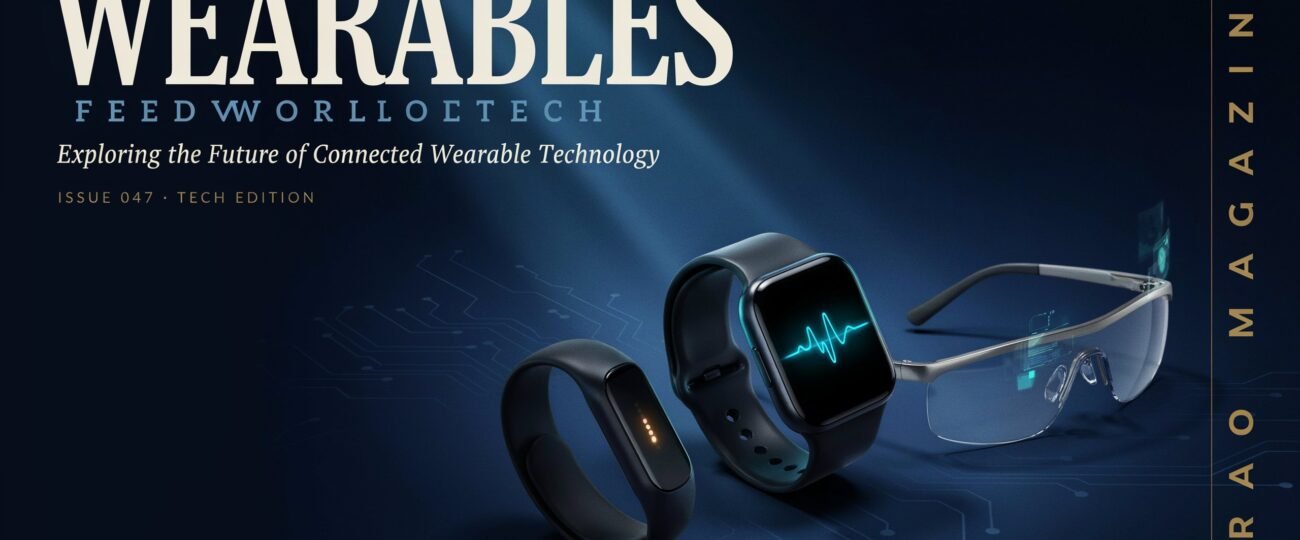

Wearable technology has quietly shifted from being a niche category for fitness enthusiasts to becoming one of the fastest-evolving areas of consumer technology. Smartwatches now monitor heart rhythms, fitness bands analyze sleep quality, and smart glasses are beginning to redefine how people interact with digital information. As innovation accelerates, platforms and technology-focused communities have become essential for tracking developments, comparing products, and understanding emerging trends.
Among the names appearing in discussions about wearable technology is Wearables FeedWorldTech. Whether someone encounters the term while searching for the latest wearable devices, industry insights, or technology updates, the growing interest reflects a broader movement toward connected, intelligent, and data-driven lifestyles.
This article examines what Wearables FeedWorldTech represents, how wearable technology has evolved, the technologies driving the industry, and why wearable devices are becoming increasingly important in healthcare, fitness, productivity, and everyday life. Rather than focusing only on individual gadgets, it explores the ecosystem shaping the future of connected experiences.
What Is Wearables FeedWorldTech?
The phrase Wearables FeedWorldTech generally refers to technology content, news, discussions, and industry coverage centered on wearable devices and the innovations surrounding them. While wearable products themselves continue to evolve, technology-focused platforms have become valuable resources for consumers, developers, investors, and businesses seeking reliable information about this rapidly changing market.
Instead of representing a single wearable device, Wearables FeedWorldTech is commonly associated with coverage of topics such as:
- Smartwatches
- Fitness trackers
- Smart rings
- AR and VR headsets
- Smart glasses
- Health-monitoring devices
- AI-powered wearables
- Enterprise wearable solutions
- Medical wearable innovations
- Future wearable technology trends
The growing interest in wearable technology reflects how these devices are moving beyond simple activity tracking into areas like preventive healthcare, workplace productivity, digital payments, communication, and immersive experiences.
For readers researching wearable technology, platforms covering these innovations can provide valuable perspectives on product launches, software updates, market developments, and expert analysis.
Why Wearable Technology Matters More Than Ever
Only a decade ago, wearable devices were often viewed as optional accessories. Today, they are becoming integral tools for personal health, communication, and productivity.
Several global trends have accelerated this shift:
- Increased health awareness
- Remote work adoption
- AI integration
- Expansion of mobile ecosystems
- Improved wireless connectivity
- Advances in sensor technology
- Longer battery life
- Cloud computing
- Edge AI processing
These developments have transformed wearable devices from passive accessories into active digital assistants capable of collecting, analyzing, and responding to real-time information.
The Evolution of Wearable Technology
Modern wearables did not emerge overnight. Their development spans decades of technological experimentation and consumer adoption.
| Period | Major Development | Industry Impact |
|---|---|---|
| 1970s–1980s | Early digital watches | Portable electronic computing begins |
| 1990s | Heart-rate monitors | Fitness technology expands |
| Early 2000s | Bluetooth accessories | Mobile connectivity improves |
| 2010–2014 | Fitness trackers gain popularity | Consumer health monitoring grows |
| 2015–2019 | Smartwatches become mainstream | Health features expand significantly |
| 2020–Present | AI-powered wearable ecosystems | Continuous health insights and connected experiences |
Each stage introduced capabilities that made wearables more practical and appealing. What started as simple digital timepieces has evolved into sophisticated devices capable of monitoring dozens of biometric indicators while seamlessly integrating with smartphones and cloud services.
How Wearables FeedWorldTech Reflects Industry Growth
The wearable technology sector evolves rapidly. New hardware, software updates, and health features appear almost monthly, making reliable information increasingly valuable.
Technology-focused coverage often centers on several key areas:
Product Reviews
Consumers rely on detailed evaluations before investing in devices that often cost hundreds of dollars. Reviews help compare design, battery life, software experience, health tracking accuracy, and ecosystem compatibility.
Industry News
Major announcements—from new sensors to software upgrades—can significantly influence purchasing decisions and market trends.
Innovation Coverage
Emerging concepts such as AI wearables, smart clothing, neural interfaces, and advanced biometric monitoring receive growing attention as companies explore the next generation of connected technology.
Consumer Education
Many users are unfamiliar with features like ECG monitoring, blood oxygen tracking, fall detection, or stress analysis. Educational content helps explain these technologies in accessible language.
Understanding the Wearable Technology Ecosystem
Wearable devices rarely operate in isolation. Instead, they function as part of a broader digital ecosystem that connects hardware, software, cloud platforms, smartphones, and artificial intelligence.
Several interconnected components work together to create a seamless user experience.
Hardware
Hardware includes the physical device itself, such as:
- Smartwatch
- Fitness band
- Smart ring
- Smart glasses
- Medical wearable
- Smart earbuds
- AR headset
Each category serves different purposes but shares the common goal of collecting data while remaining lightweight, portable, and comfortable.
Sensors
Sensors form the foundation of wearable technology.
Modern devices may include:
- Optical heart-rate sensors
- Accelerometers
- Gyroscopes
- GPS chips
- Skin temperature sensors
- Blood oxygen sensors
- Ambient light sensors
- Barometers
- Electrocardiogram (ECG) sensors
These components continuously collect information that software interprets into meaningful health and activity insights.
Connectivity
Wearables communicate through multiple technologies:
- Bluetooth
- Wi-Fi
- NFC
- LTE
- 5G
- Ultra-Wideband (UWB)
Improved connectivity enables faster synchronization, better cloud integration, and more independent functionality.
Artificial Intelligence
AI has become one of the most transformative aspects of wearable technology.
Rather than simply displaying data, modern devices increasingly analyze user behavior to provide personalized recommendations.
Examples include:
- Sleep coaching
- Workout recommendations
- Stress detection
- Recovery analysis
- Health alerts
- Personalized activity goals
This shift from passive tracking to intelligent guidance represents one of the industry’s most significant advancements.
Types of Wearable Devices Covered in the Industry
The wearable market has diversified considerably over the past decade.
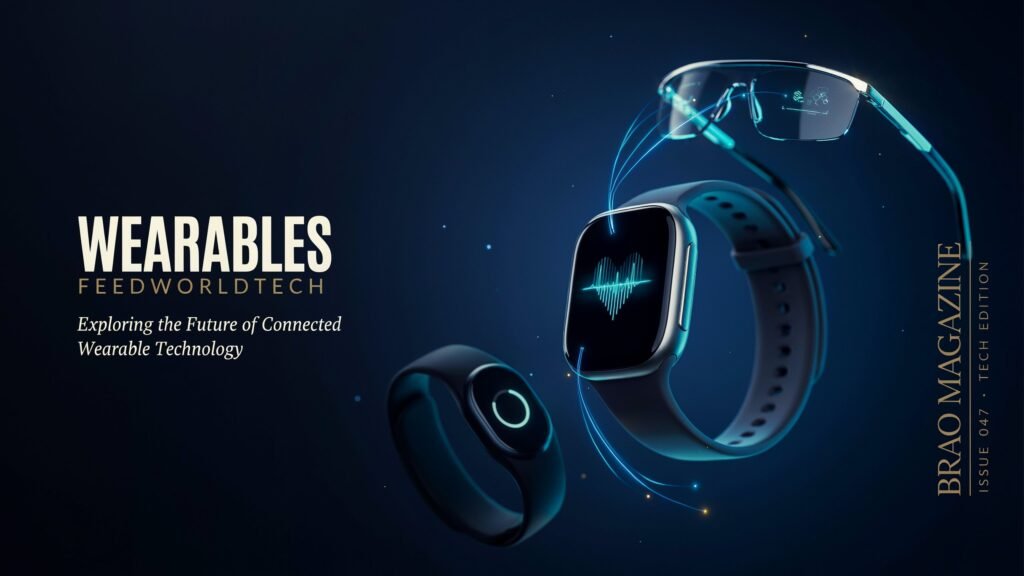
Smartwatches
Smartwatches combine communication, productivity, health monitoring, and mobile applications into a compact wrist-worn device.
Common capabilities include:
- Notifications
- Calls
- Messaging
- GPS navigation
- Contactless payments
- Health monitoring
- Fitness tracking
They have become central hubs within many users’ digital ecosystems.
Fitness Trackers
Fitness bands prioritize activity monitoring and typically offer:
- Step counting
- Workout tracking
- Heart-rate monitoring
- Sleep analysis
- Calorie estimation
- Water resistance
Their lightweight design and longer battery life appeal to users focused primarily on health and exercise.
Smart Rings
Smart rings represent one of the fastest-growing wearable categories.
Despite their small size, many now include:
- Sleep monitoring
- Recovery tracking
- Heart-rate analysis
- Temperature sensing
- Activity monitoring
Their discreet form factor appeals to users seeking continuous monitoring without wearing a smartwatch.
Smart Glasses
Smart glasses are transitioning from experimental gadgets to practical productivity tools.
Emerging applications include:
- Navigation
- Translation
- Photography
- AI assistants
- Remote collaboration
- Industrial maintenance
- Education
As display technology and battery efficiency improve, smart glasses may become one of the most influential wearable categories over the coming decade.
Medical Wearables
Healthcare has become one of the most impactful areas for wearable innovation.
Medical-grade wearables can support:
- Continuous glucose monitoring
- Cardiac monitoring
- Remote patient observation
- Blood oxygen tracking
- Fall detection
- Medication reminders
These devices increasingly bridge the gap between consumer technology and clinical care, offering opportunities for earlier intervention and more personalized treatment.
The Technologies Powering Modern Wearables
The remarkable capabilities of today’s wearable devices are made possible by advances across multiple technology domains.
| Technology | Role in Wearables | Real-World Benefit |
|---|---|---|
| Artificial Intelligence | Data analysis and personalization | Smarter recommendations |
| Machine Learning | Pattern recognition | Improved health insights |
| Bluetooth Low Energy | Device communication | Better battery efficiency |
| Cloud Computing | Data storage and synchronization | Multi-device access |
| Edge Computing | Local processing | Faster performance |
| Biometric Sensors | Health monitoring | Continuous wellness tracking |
| GPS | Location services | Outdoor activity tracking |
| NFC | Contactless payments | Convenient transactions |
Rather than relying on a single innovation, modern wearables combine these technologies to deliver experiences that are increasingly seamless, intelligent, and personalized.
Why Consumers Continue to Adopt Wearables
Several factors explain the sustained growth of wearable technology:
- Greater awareness of preventive health
- Demand for real-time fitness insights
- Convenience of contactless payments
- Smartphone integration
- Improved battery performance
- More accurate health sensors
- Stylish, lightweight designs
- AI-driven personalization
- Expanding app ecosystems
- Growing enterprise and healthcare applications
For many users, wearables have evolved from optional gadgets into everyday companions that support healthier habits, improved productivity, and more informed decision-making.
Key Features That Define Modern Wearables
The wearable technology landscape has matured significantly over the past few years. Devices are no longer judged solely by step counts or notification support. Instead, users expect a combination of intelligent software, reliable hardware, long battery life, and meaningful insights that improve daily life.
Technology discussions surrounding Wearables FeedWorldTech often focus on the following capabilities because they represent the features driving today’s market.
Advanced Health Monitoring
Health tracking has become the defining feature of many wearable devices. Improvements in optical sensors, machine learning, and biometric analysis allow wearables to collect health information continuously rather than during occasional checkups.
Common capabilities include:
- Continuous heart rate monitoring
- Blood oxygen (SpO₂) tracking
- ECG (Electrocardiogram) support on compatible devices
- Skin temperature monitoring
- Respiratory rate tracking
- Sleep stage analysis
- Menstrual cycle insights
- Stress measurement
- Guided breathing sessions
While these tools can provide useful wellness insights, they are not substitutes for professional medical diagnosis unless specifically approved for clinical use.
AI-Powered Personalization
Artificial intelligence is transforming wearables from passive trackers into intelligent assistants.
Instead of merely displaying data, AI can identify trends over weeks or months, helping users make informed decisions.
Examples include:
- Suggesting recovery days after intense exercise
- Identifying irregular sleep patterns
- Detecting unusually high resting heart rates
- Recommending activity goals based on previous performance
- Learning user routines to improve notifications
As AI models become more sophisticated, wearable devices are expected to deliver increasingly personalized recommendations rather than generic fitness advice.
Seamless Ecosystem Integration
One reason wearables continue gaining popularity is their ability to work with multiple connected devices.
Many ecosystems allow users to synchronize data across:
- Smartphones
- Tablets
- Laptops
- Smart TVs
- Wireless earbuds
- Smart home devices
- Connected vehicles
This interconnected experience allows users to begin a workout on one device, continue monitoring through another, and review performance later using cloud-based dashboards.
Improved Battery Technology
Battery life remains one of the most important purchasing considerations.
Manufacturers have responded with:
- Low-power processors
- Bluetooth Low Energy (BLE)
- Adaptive refresh rates
- Intelligent background processing
- Fast charging
- Wireless charging
Depending on the device category, battery life now ranges from a single day to several weeks.
Benefits of Wearable Technology
The growing adoption of wearables reflects more than consumer curiosity. These devices solve practical problems across healthcare, fitness, communication, and workplace productivity.
Better Awareness of Personal Health
One of the greatest strengths of wearable technology is continuous monitoring.
Rather than relying on occasional measurements, users receive ongoing insights into daily habits.
Examples include:
- Average heart rate
- Sleep consistency
- Physical activity levels
- Exercise intensity
- Recovery time
- Sedentary behavior
These metrics encourage healthier routines and greater awareness of long-term wellness trends.
Motivation Through Real-Time Feedback
Many people struggle to maintain consistent exercise habits.
Wearables help by providing:
- Daily movement reminders
- Achievement badges
- Workout summaries
- Goal tracking
- Weekly progress reports
Small behavioral nudges often encourage users to remain active throughout the day.
Improved Workplace Productivity
Wearables are increasingly used beyond personal fitness.
Businesses deploy wearable devices for:
- Warehouse logistics
- Manufacturing support
- Equipment monitoring
- Workforce safety
- Hands-free communication
- Remote collaboration
Smart glasses, for example, allow technicians to access manuals or receive live expert guidance while working, reducing downtime and improving efficiency.
Enhanced Safety Features
Modern wearables include safety capabilities that extend beyond fitness tracking.
Popular features include:
- Fall detection
- Emergency SOS alerts
- Crash detection on supported devices
- Live location sharing
- Medical ID access
- Emergency contact notifications
These functions can provide additional peace of mind, particularly for older adults or individuals with certain health conditions.
Convenient Everyday Functions
Wearables simplify numerous daily tasks.
Examples include:
- Contactless payments
- Calendar reminders
- Voice assistants
- Music control
- Navigation
- Weather updates
- Smart home controls
- Camera remote functions
Instead of constantly reaching for a smartphone, users can complete many actions directly from their wrist or wearable device.
Challenges and Limitations
Despite rapid innovation, wearable technology still faces several practical challenges.
Understanding these limitations helps consumers make informed purchasing decisions.
Battery Constraints
Although battery performance has improved, feature-rich devices often require frequent charging.
Continuous GPS usage, always-on displays, and advanced health monitoring can significantly reduce battery life.
Data Accuracy
Wearables provide estimates rather than perfect measurements.
Factors such as:
- Skin tone
- Device positioning
- Motion
- Environmental conditions
- Sensor quality
can influence readings.
For this reason, wearable health data should generally be viewed as informational unless validated for medical use.
Privacy Concerns
Wearables collect large amounts of sensitive personal information.
This may include:
- Health metrics
- Activity history
- Sleep patterns
- Location information
- Exercise routines
Consumers should understand privacy settings, review permissions, and choose trusted manufacturers that provide transparent data policies.
Cost
Premium wearable devices often command premium prices.
Consumers must weigh whether advanced features justify the additional investment compared with more affordable alternatives.
Pros and Cons of Wearable Technology
| Advantages | Limitations |
|---|---|
| Continuous health tracking | Battery life limitations |
| Encourages healthy habits | Data accuracy varies |
| Smart notifications | Premium models can be expensive |
| Contactless payments | Privacy concerns |
| AI-powered recommendations | Some features require subscriptions |
| Emergency safety features | Ecosystem compatibility varies |
| Improved productivity | Learning curve for new users |
Real-World Applications of Wearable Technology
Wearables have expanded far beyond personal fitness. Their influence now extends across multiple industries.
Healthcare
Healthcare remains one of the fastest-growing applications.
Examples include:
- Remote patient monitoring
- Cardiac rhythm observation
- Diabetes management
- Rehabilitation tracking
- Chronic disease management
- Elderly care
Healthcare providers increasingly recognize the value of continuous patient-generated health data when used alongside traditional clinical assessments.
Sports and Fitness
Professional athletes and amateur fitness enthusiasts use wearables to monitor performance.
Typical metrics include:
- Running pace
- Cycling power
- Swimming efficiency
- Recovery scores
- Training load
- VO₂ max estimates
- Heart-rate zones
Coaches often analyze this information to optimize training while reducing injury risk.
Enterprise and Industrial Workplaces
Businesses increasingly deploy wearable technologies to improve operational efficiency.
Examples include:
- Inventory management
- Warehouse navigation
- Safety monitoring
- Remote maintenance
- Hands-free instructions
- Workforce communication
Augmented reality headsets have become particularly valuable in manufacturing and field service environments.
Education
Educational institutions are experimenting with wearables for:
- Virtual laboratories
- Immersive learning
- Interactive science education
- Medical training simulations
- Language translation
- Accessibility support
As hardware becomes more affordable, educational use cases are expected to expand.
Retail
Retail organizations use wearables to improve customer experiences and staff productivity.
Applications include:
- Mobile payments
- Inventory tracking
- Smart shopping assistance
- Employee communication
- Personalized promotions
These technologies streamline operations while supporting faster customer service.
How Wearables Compare Across Categories
Different wearable devices serve different needs. Choosing the right option depends on how you plan to use it.
| Device Type | Best For | Typical Strengths | Potential Drawbacks |
|---|---|---|---|
| Smartwatch | Everyday users | Communication, apps, health tracking | Shorter battery life |
| Fitness Tracker | Active lifestyles | Long battery life, affordability | Fewer smart features |
| Smart Ring | Discreet health monitoring | Comfortable, continuous tracking | Smaller displays, limited controls |
| Smart Glasses | Productivity and AR | Hands-free information, navigation | Higher cost, evolving software |
| Medical Wearable | Health management | Specialized monitoring | Often designed for specific conditions |
No single category is universally “best.” A smartwatch may suit someone who wants an all-in-one device, while a fitness tracker or smart ring may appeal to users prioritizing comfort and battery longevity.
Expert Insights: Where the Industry Is Headed
Technology analysts broadly agree on several long-term trends shaping the wearable sector.
Health Monitoring Will Become More Sophisticated
Future devices are expected to incorporate additional sensors capable of providing deeper health insights while remaining non-invasive. Research continues into areas such as hydration, blood pressure estimation, and improved metabolic tracking.
Artificial Intelligence Will Become More Context-Aware
Rather than reacting only to isolated data points, AI systems are expected to analyze patterns over time. This could enable wearables to provide more personalized wellness guidance, productivity suggestions, and contextual alerts.
Smaller Devices, Greater Capability
Advances in chip design, battery efficiency, and sensor miniaturization are allowing manufacturers to pack more functionality into smaller, lighter devices without sacrificing performance.
Wearables Will Expand Beyond Consumer Electronics
Enterprise, healthcare, logistics, education, and industrial sectors are expected to account for an increasing share of wearable technology adoption. As organizations seek greater efficiency and real-time data, specialized wearables will likely become standard tools in many workplaces.
Privacy, Security, and Ethical Considerations
As wearable technology becomes more sophisticated, the conversation extends beyond hardware and software. These devices collect sensitive personal information every day, making privacy, security, and ethical data use just as important as new features.
Whether someone uses a smartwatch to track workouts or a medical wearable to monitor health, understanding how personal data is collected and managed is essential.
Data Privacy
Most wearable devices gather information such as:
- Heart rate
- Sleep habits
- Activity levels
- GPS location
- Exercise history
- Device usage
- Health metrics
Many of these insights are stored in cloud-based accounts, allowing users to access historical data across multiple devices. While this improves convenience, it also highlights the importance of reviewing privacy settings and understanding how data is handled.
Before purchasing a wearable, it’s worth checking:
- What information the device collects
- Whether data is encrypted
- How long data is stored
- Whether users can delete their information
- If third-party apps have access to health data
Companies that clearly explain their privacy practices generally inspire greater trust among consumers.
Security Challenges
Like any connected device, wearables can face cybersecurity risks if they are not properly protected.
Potential concerns include:
- Weak account passwords
- Outdated software
- Unsecured Bluetooth connections
- Unauthorized app permissions
- Data breaches affecting cloud services
Fortunately, manufacturers continue to improve security through encrypted communication, multi-factor authentication, regular firmware updates, and secure cloud infrastructure. Users also play a role by keeping software updated and enabling available security features.
Ethical Questions Around Wearables
As wearable technology becomes more capable, ethical discussions are becoming increasingly relevant.
Some of the questions experts continue to explore include:
- How much personal health data should companies collect?
- Who ultimately owns wearable-generated health information?
- Can employers require wearable devices in certain workplaces?
- How should AI-generated health insights be regulated?
- Where should the line be drawn between personalization and surveillance?
There are no universal answers yet. Regulations continue to evolve, and industry standards are adapting as wearable adoption grows.
Common Mistakes People Make When Buying Wearables
With dozens of options available, it’s easy to focus on marketing rather than practical needs. Avoiding a few common mistakes can lead to a much better long-term experience.
Buying Based Only on Brand
A well-known brand does not automatically mean the device is the best fit. Consider whether its features align with your priorities instead of choosing solely based on popularity.
Ignoring Ecosystem Compatibility
Some wearable devices perform best within specific smartphone ecosystems.
Before purchasing, verify compatibility with:
- Android
- iPhone
- Tablet devices
- Desktop software
- Third-party fitness platforms
A feature-rich smartwatch may lose important functionality if paired with an unsupported operating system.
Paying for Features You’ll Never Use
Premium models often include advanced capabilities such as:
- Diving modes
- Professional athletic metrics
- Offline navigation
- LTE connectivity
- Advanced ECG functions
If your primary goal is tracking steps, sleep, and notifications, a more affordable model may provide excellent value.
Overlooking Battery Life
Battery performance directly affects day-to-day usability. Frequent travelers or outdoor enthusiasts may prefer devices that last a week or longer between charges, while users who charge nightly may be comfortable with more feature-rich smartwatches.
Ignoring Long-Term Software Support
Hardware is only part of the experience. Regular software updates improve security, fix bugs, and introduce new features. Devices with strong update policies generally offer better long-term value.
Best Practices for Choosing the Right Wearable
The “best” wearable depends on individual goals rather than a universal ranking.
Ask yourself a few practical questions before making a decision.
If Health Tracking Is the Priority
Look for devices that offer:
- Accurate heart rate monitoring
- Sleep tracking
- Blood oxygen measurement
- ECG support (where available)
- Reliable companion apps
If Fitness Comes First
Consider:
- Built-in GPS
- Workout modes
- Water resistance
- Recovery analysis
- Long battery life
If Productivity Matters Most
Features worth prioritizing include:
- Calendar integration
- Voice assistant support
- Contactless payments
- Smart notifications
- Cross-device synchronization
If Comfort Is Essential
A lightweight smart ring or slim fitness tracker may be more comfortable for continuous wear than a larger smartwatch.
The Future of Wearables FeedWorldTech
The wearable technology industry is still in a relatively early stage compared with smartphones or personal computers. Innovation continues at a rapid pace, and the coming years are likely to reshape how people interact with digital devices.
Several developments are expected to define the next generation of wearables.
AI Will Become Increasingly Predictive
Future wearables may move beyond reporting current data to identifying patterns that suggest potential health or lifestyle changes. Instead of simply displaying information, they could provide earlier recommendations based on long-term trends.
Better Non-Invasive Health Monitoring
Researchers are exploring technologies that may eventually enable more advanced monitoring without traditional blood tests or invasive procedures. While many concepts remain under development, progress in sensor technology continues to attract significant interest.
Smarter Augmented Reality
Smart glasses are expected to become lighter, faster, and more practical for everyday use. Potential applications include navigation, language translation, remote collaboration, education, and real-time access to contextual information.
Improved Sustainability
Manufacturers are placing greater emphasis on:
- Recycled materials
- Repairability
- Energy-efficient components
- Longer product lifecycles
- Reduced packaging waste
As consumers become more environmentally conscious, sustainability is likely to play a larger role in purchasing decisions.
Expanded Enterprise Adoption
Wearables are increasingly finding roles in healthcare, logistics, manufacturing, construction, retail, and education. Rather than remaining consumer-focused devices, they are becoming practical business tools that improve efficiency, safety, and collaboration.
Frequently Asked Questions (FAQs)
1. What does Wearables FeedWorldTech refer to?
Wearables FeedWorldTech generally relates to technology news, insights, discussions, and industry coverage focused on wearable devices, emerging innovations, market trends, and connected technologies.
2. Are wearable devices medically accurate?
Most consumer wearables provide useful wellness estimates rather than clinical diagnoses. Some devices include medically validated features, but users should always consult healthcare professionals for medical concerns.
3. Which wearable device is best for fitness?
The best choice depends on individual goals. Fitness trackers often emphasize battery life and activity monitoring, while smartwatches provide broader functionality, including communication and app support.
4. Do wearable devices require smartphones?
Not always. Many wearables can perform basic functions independently, while others rely on smartphones for setup, synchronization, or advanced features. Cellular-enabled models offer greater independence.
5. Is wearable data secure?
Most major manufacturers use encryption and security measures, but users should enable strong passwords, update software regularly, and review privacy settings to protect personal information.
6. What industries benefit most from wearable technology?
Healthcare, sports, manufacturing, logistics, retail, education, and construction are among the industries increasingly adopting wearable solutions to improve efficiency, safety, and decision-making.
7. Are smart rings replacing smartwatches?
Not necessarily. Smart rings provide discreet health tracking and excellent comfort, while smartwatches offer larger displays, communication features, navigation, and broader app ecosystems. Many users see them as complementary rather than competing devices.
8. What is the future of wearable technology?
The future points toward more intelligent, AI-assisted devices with improved sensors, enhanced battery efficiency, greater personalization, stronger privacy protections, and wider adoption across consumer and professional settings.
Conclusion
Wearable technology has evolved from simple digital accessories into intelligent companions capable of supporting healthier lifestyles, improving workplace efficiency, and enhancing everyday convenience. Platforms and discussions surrounding Wearables FeedWorldTech reflect the growing importance of staying informed about this rapidly changing field, where advancements in artificial intelligence, biometric sensing, and connected ecosystems continue to reshape expectations.
While no single wearable is ideal for every user, understanding how these devices work, what features matter most, and where the technology is heading allows consumers and businesses to make better-informed decisions. As innovation continues, wearables are likely to become even more integrated into daily life, offering increasingly personalized experiences while raising important conversations about privacy, ethics, and responsible data use.
For anyone interested in the future of connected technology, wearable devices represent one of the most dynamic and influential areas to watch over the coming decade.